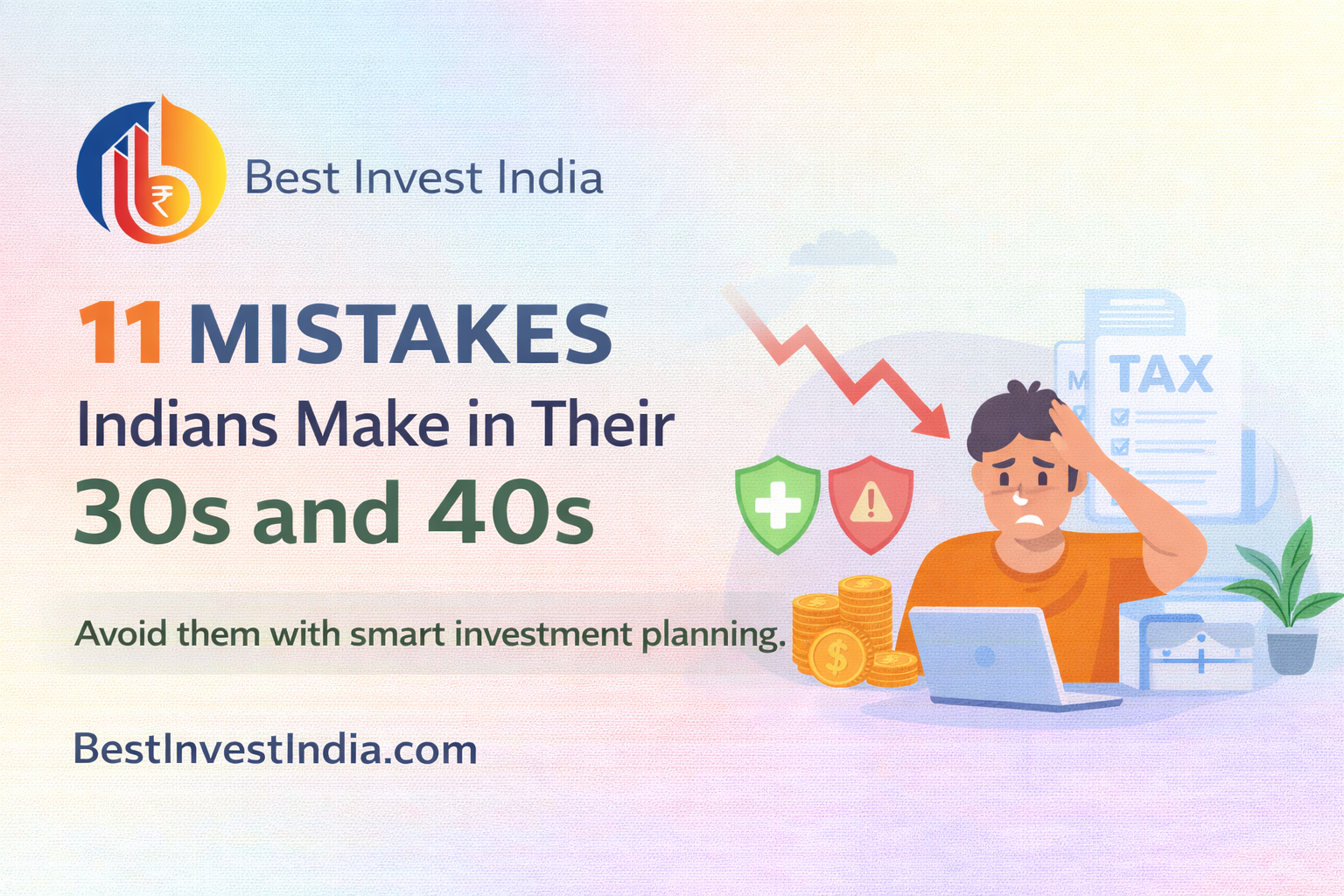
Your 30s and 40s are the most important years of your financial life and if you can avoid these financial mistakes Indians make( most Indians ) life can be financially glorified.
This is the phase when income grows, responsibilities increase, and major life goals take shape-buying a home, raising children, supporting parents, and planning retirement.
However, this is also the stage where many people unknowingly make serious financial errors. Understanding the financial mistakes Indians make during their 30s and 40s can help you avoid costly decisions and build a more secure future.
Let’s look at the most common mistakes—and how you can avoid them.
Table of Contents
1. Not Having a Proper Financial Plan
Many individuals earn well and invest occasionally but never create a structured financial plan.
They rely on:
- Random savings
- short term investment horizon
- Advice from friends
- Popular investment trends
Without a financial plan, money lacks direction.
Why this is risky:
You may save money but still fall short when major expenses arise. Therefore planning is necessary.
How to avoid this mistake:
Create a comprehensive financial plan that includes:
- Income and expense tracking
- Goal-based investing
- Insurance coverage
- Retirement planning
Financial planning ensures your money works with purpose not confusion.
want to know more about Financial Planning:
What is Financial Planning in India- A Beginner’s Guide for Indians
2. Ignoring Emergency Funds
One of the biggest financial mistakes Indians make is not maintaining an emergency fund.
Many people assume they can manage emergencies using credit cards or loans or existing investments.
But emergencies like:
- Medical expenses
- Job loss
- Sudden repairs
can disrupt finances instantly. Because exiting a investment in between may caouse compounding loss, penalties and lost goal funding that further derail financial lives.
Why this is risky:
Without emergency savings, you may break investments or borrow at high interest rates.
How to avoid this mistake:
Maintain 6–12 months of expenses in an emergency fund.
Keep it easily accessible.
This single step can prevent major financial stress.
Build your emergency Fund
3. Being Underinsured or Overinsured
Insurance is often misunderstood. Some people buy too many policies. While Others avoid insurance completely.
Both are big mistakes.
Common issues include:
- Buying insurance as investment
- Having insufficient health coverage
- Ignoring term insurance
Why this is risky:
Unexpected events can wipe out years of savings.
How to avoid this mistake:
Ensure you have:
- Adequate health insurance
- Term life insurance
- Accident coverage (if needed)
Insurance protects your financial future.
4. Investing Without Clear Goals
Many people invest without knowing why they are investing.
They start SIPs or buy policies without defining:
- Time horizon
- Purpose
- Required amount
This leads to scattered investments.
Why this is risky:
Money may not be available when you actually need it.
How to avoid this mistake:
Use goal-based investing for:
- Child education
- Home purchase
- Retirement
- Wealth creation
When goals are clear, investments become meaningful.
5. Delaying Retirement Planning
Retirement often feels far away in your 30s.
So many people delay planning.
This is one of the most dangerous financial mistakes Indians make.
Why this is risky:
Delay reduces the power of compounding.
You may need to invest significantly more later.
How to avoid this mistake:
Start retirement planning early. Start investing even if the amount is small.
Time matters more than amount.
6. Taking Too Much Debt
Loans are common in the 30s and 40s.
Home loans, car loans, personal loans-many people carry multiple EMIs.
But excessive debt creates financial pressure.
Why this is risky:
High EMIs reduce savings and increase stress.
How to avoid this mistake:
Follow this rule:
Total EMIs should not exceed 30–40% of income
Avoid unnecessary loans.
Debt should support growth—not create burden.
7. Ignoring Tax Planning
Many people rush into tax-saving investments in March.
They choose options quickly without proper analysis.
This leads to poor financial decisions.
Why this is risky:
You may lock money into unsuitable investments.
How to avoid this mistake:
Plan taxes at the beginning of the financial year.
Choose tax-saving options aligned with your goals.
Tax planning support financial planning but it does not replace it.
8. Following Investment Trends (FOMO Investing)
Social media and peer influence often drive investment decisions.
People invest because:
- Others are investing
- Trends look profitable
- Quick returns sound attractive
This is risky.
Why this is risky:
Trend-based investing increases chances of losses.
How to avoid this mistake:
Focus on:
- Long-term goals
- Risk tolerance
- Disciplined investing
Avoid emotional decisions.
9. Not Reviewing Investments Regularly
Many individuals invest once and forget.
They don’t track:
- Performance
- Asset allocation
- Goal progress
This leads to inefficiencies.
Why this is risky:
Investments may drift away from goals.
How to avoid this mistake:
Review finances at least once a year.
Make adjustments when needed.
Regular reviews improve results.
10. Not Planning for Children’s Future Early
Education costs in India are rising rapidly.
Yet many parents delay planning.
They assume they will manage later.
Why this is risky:
Future costs may become overwhelming.
Loans may become necessary.
How to avoid this mistake:
Start investing early for:
✔ Child education
✔ Higher studies
✔ Career opportunities
Early planning reduces future burden.
Why These Mistakes Happen
Most financial mistakes Indians make are not due to lack of income.
They happen due to:
- Lack of financial awareness
- Delayed decision-making
- Emotional investing
- Absence of structured planning
Financial clarity prevents financial mistakes.
Signs You Might Be Making Financial Mistakes
You may need financial correction if:
- You feel unsure about your finances
- You frequently break investments
- You rely heavily on loans
- You don’t know your retirement readiness
- You feel financial stress
These are warning signs—not failures.
They indicate the need for better planning.
How to Avoid Financial Mistakes in Your 30s and 40s

Simple steps can prevent major problems.
- Create a financial plan
- Build an emergency fund
- Take proper insurance
- Invest based on goals
- Review finances annually
- Plan retirement early
- Avoid unnecessary loans
Consistency matters more than perfection.
Final Thoughts
Your 30s and 40s define your financial future.
The decisions you make during these years determine whether your later life will be comfortable or stressful.
Understanding the financial mistakes Indians make gives you the opportunity to avoid them and move toward financial stability.
Small corrections today can create big improvements tomorrow.
Because in personal finance:
Avoiding mistakes is often more powerful than chasing returns.
Are you in your 30s or 40s and unsure whether you’re making the right financial decisions?
You don’t have to figure it out alone.
A structured financial plan can help you:
- Avoid costly mistakes
- Achieve life goals
- Protect your family
- Build long-term wealth
Book your Financial Planning Consultation Today
Your hard-earned money deserves proper direction.
Related Articles: