Retirement is one of the most important financial goals in life. In India, many people start thinking about it only when they are close to their 50s, which often leads to financial stress later. Avoiding common retirement mistakes can make the difference between a comfortable retired life and one filled with compromises.
Table of Contents
Common Retirement Mistakes in India
1. Delaying Retirement Planning
One of the biggest retirement mistakes in India is starting late and delaying it. Many people believe they have enough time, but the later they start, the harder it becomes to build a sufficient retirement corpus. They prioritise only the immediate expenses like travel, home purchases, impulse buying, etc.
Early planning allows money to grow with the power of compounding. Starting late can burn a hole in the pocket, as you have to shell out additional money.
2. Underestimating Inflation
People assume their own hypothetical retirement corpus without proper plan. This is because they ignore Inflation while planning for retirement.
For instance, A monthly expense of Rs 50,000 today may cost over Rs 1 lakh in just 12–15 years. The right calculation should be done to avoid a shortfall in the retirement corpus.
People also underestimate the lifestyle based inflation. For instance around 20-25 years before there used to be single telephone connection, doordarshan used to be there. But now a days it has been replaced by mobiles, mandatory internet connections and OTT platforms.
3. Relying Only on Provident Fund (PF)/ Pension Schemes
Most salaried individuals in India depend heavily on PF or pension schemes. These schemes are helpful, but they are usually not enough to maintain lifestyle after retirement. You need additional investments like mutual funds, stocks, NPS or bonds.
4. Not Diversifying Investments
In due course of life, People become fond of one kind of investment. Putting all your savings into one asset class or investments like fixed deposits, gold, real estate, bonds, or equity can be risky.
A balanced portfolio with equity, debt, and some fixed-income investments gives better long-term growth and stability.
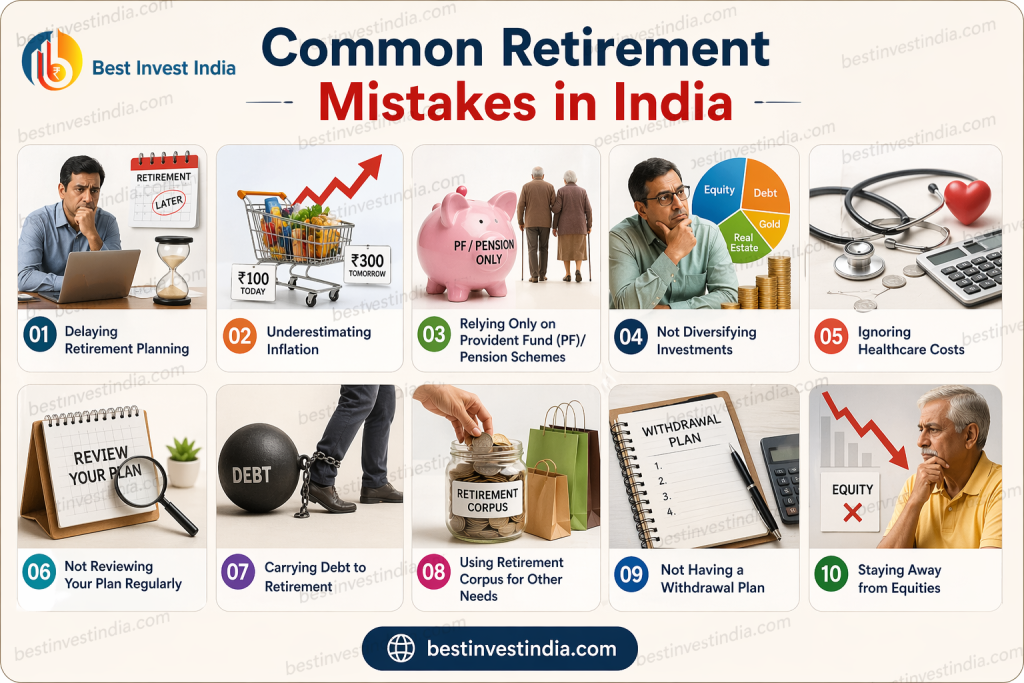
5. Ignoring Healthcare Costs
Medical expenses are one of the biggest financial burdens after retirement. At a young age, people buy low health cover, not estimating the high future cost.
At a certain age, when illness is diagnosed, the company either ask very high premium.
Sometimes they deny a new cover /policy. In case of underinsurance, the hospital bill can wipe out a big chunk of wealth/ retirement corpus.
Many people forget to buy adequate health insurance early, which becomes costly or unavailable later in life.
How to increase Health Cover cost-effective way
6. Not Reviewing Your Plan Regularly
Many people make the mistake of creating a retirement plan once and then forgetting about it. But life, expenses, and markets are constantly changing, and not reviewing your plan regularly can have serious consequences.
- Missed Adjustment for Inflation
If your plan isn’t updated, your savings may fall short because inflation keeps increasing the cost of living. What seems enough today may not be enough 10–15 years later. - Lifestyle Changes
As you grow, your lifestyle needs may change. Without regular reviews, your plan may not match your real future expenses. - Ignoring Market Performance
Investments don’t always perform as expected. If you don’t track and rebalance, you may either take too much risk or earn lower returns. - Unplanned Responsibilities
Family responsibilities like children’s education, marriage, or medical care for parents can change your financial situation. Without reviewing, these factors can disturb your retirement fund. - Tax and Policy Changes
Government policies, tax rules, or interest rates change over time. If your plan isn’t updated, you might miss out on new benefits or end up paying more taxes. - Risk of Falling Short
Ultimately, not reviewing your retirement plan can leave you with a gap between what you saved and what you actually need, forcing you to compromise on your lifestyle after retirement.
Timely actions can save you from Future Ugly surprises.
7. Carrying Debt into Retirement
Carrying debt into retirement can create serious financial stress. Once regular income stops, paying EMIs or credit card bills from your retirement savings reduces your corpus much faster.
Instead of enjoying financial freedom, you may end up using a big part of your pension or savings to repay loans. This not only affects your lifestyle but also limits funds for healthcare and emergencies, making retirement less secure and more stressful.
8. Using Retirement Corpus for other needs
Retirement often feels like a distant goal, and not an immediate priority. As a result, many people end up dipping into their retirement savings to meet sudden needs or desires, such as buying a house, funding children’s education, or covering other expenses.
However, this can severely impact long-term financial security. In such cases, it is wiser to explore loans or other financing options rather than compromising your retirement corpus.
Using retirement corpus for other needs might be dangerous because you don’t get loan for day to day expenses.
9. Not Having a Withdrawal Plan
Building a retirement corpus is only half the job. Without a clear withdrawal strategy, you may overspend in the initial years and run out of money too soon. A systematic withdrawal plan ensures steady cash flow.
10. Staying away from Equities
Staying away from equities can significantly reduce your retirement corpus. While fixed deposits, PPF, or other safe instruments provide stability, their returns often fail to beat inflation over the long term.
Retirement planning usually spans 20–30 years, and without equity exposure, your money grows too slowly to meet future expenses.
Equities, though volatile in the short term, generate higher returns over time and help build a much larger corpus through the power of compounding.
Avoiding them completely may leave you underfunded in retirement, forcing you to compromise on lifestyle or depend on others.
Conclusion
Retirement mistakes in India are often the result of late planning, over-dependence on traditional savings, or ignoring future expenses.
By starting early, diversifying investments, and preparing for inflation and healthcare, you can build a secure and independent retirement.
What to do?
Remember, retirement is not just about stopping work – it’s about living life on your own terms without financial worries.
Not sure if you’re making retirement mistakes?
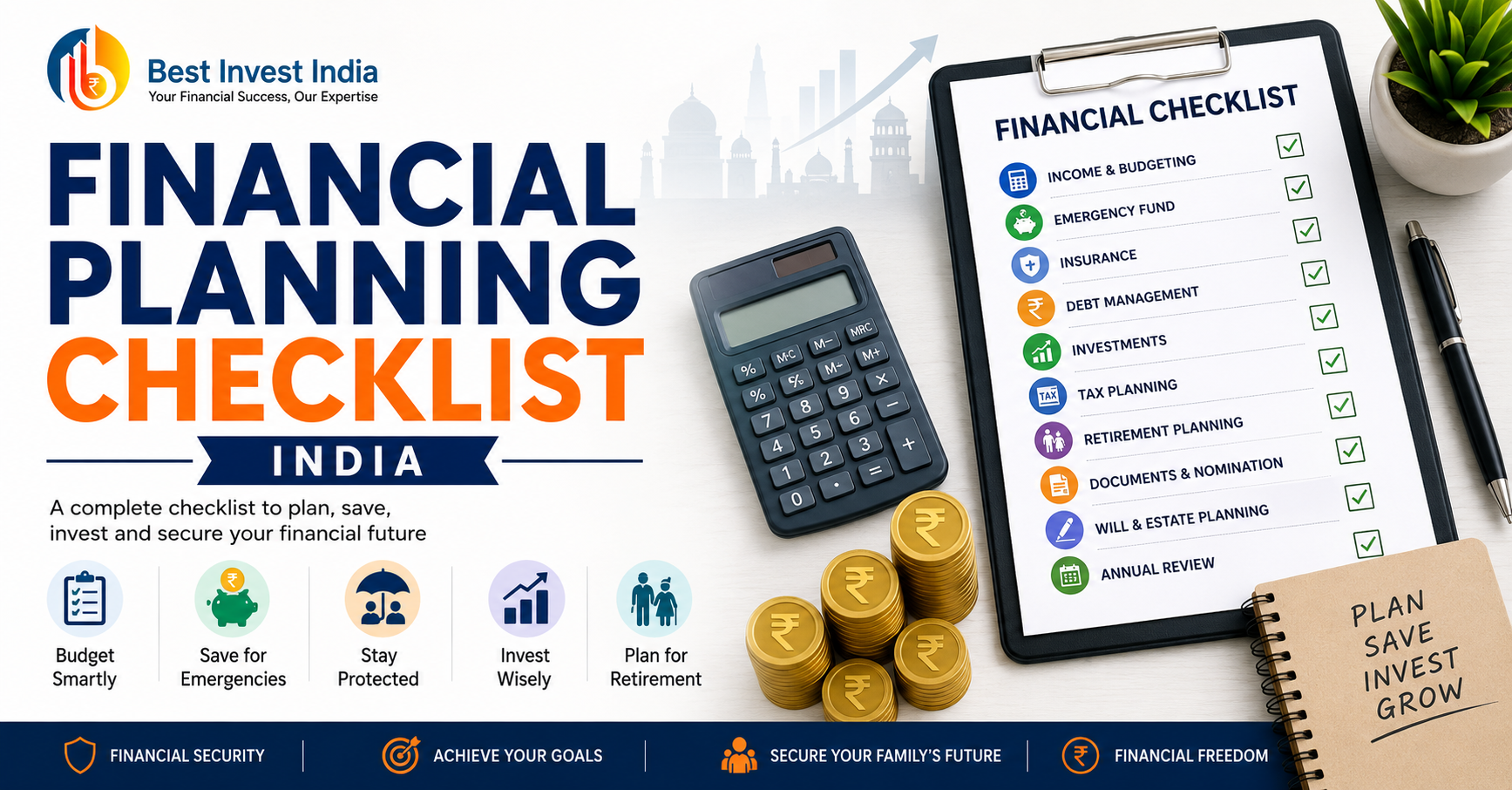
Download our FREE Retirement Planning Checklist for India and find out where you stand.
Download the Checklist Now ( coming Soon…)
Retirement is not about luck- it’s about planning.
If you want clarity on how much you need and how to achieve it,
📞 Connect with us for a guided retirement roadmap.