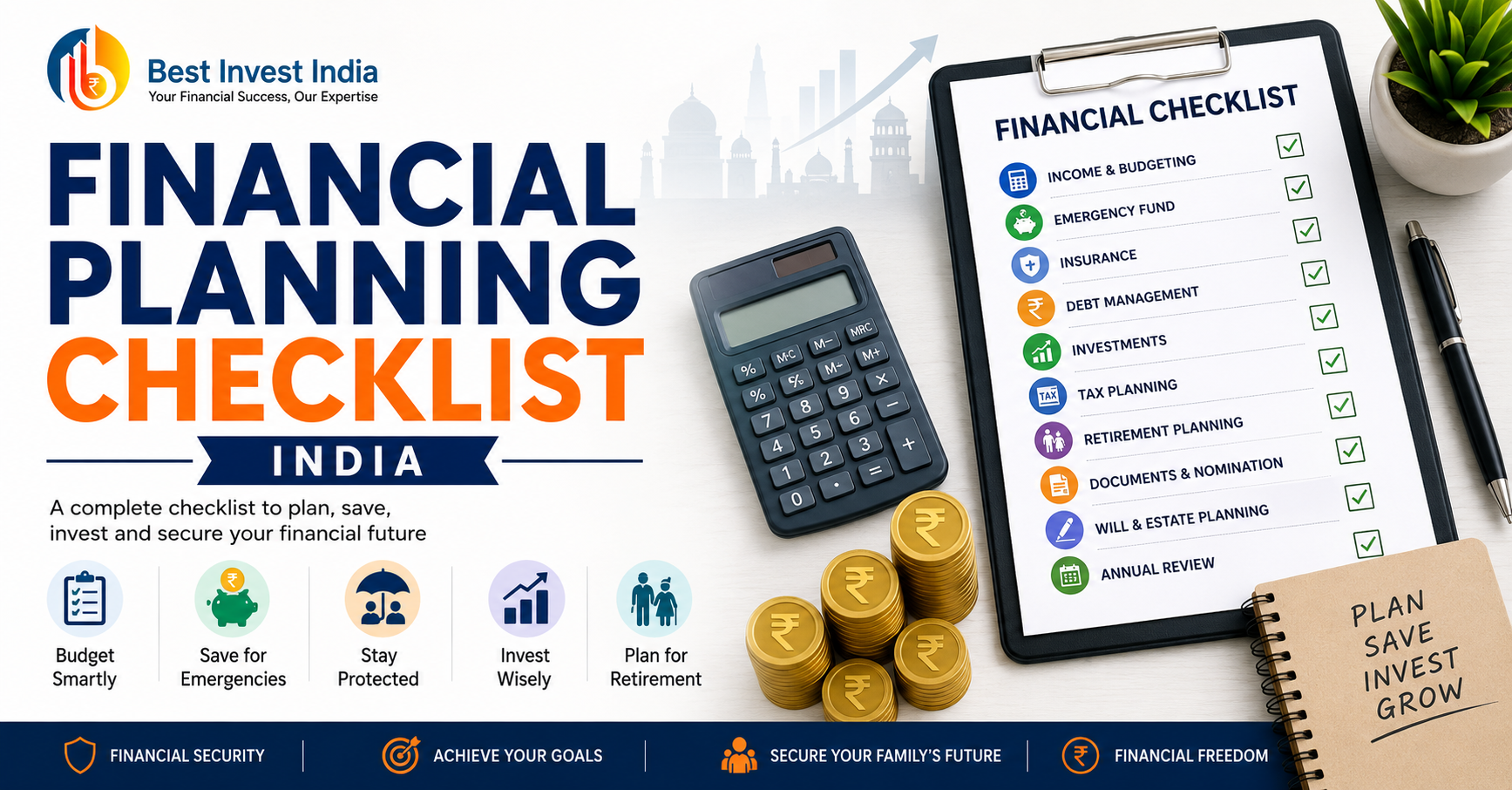
Financial Planning Checklist India is one of the most important Checklist for Every Individual & Family. This checklist is the stepping stone toward building wealth and securing your future.
Whether you are a salaried employee, self-employed professional, business owner, or retiree, having a proper financial planning checklist can help you manage money better and achieve your financial goals.
Many people earn well but still struggle financially because they do not follow a structured financial plan. A simple checklist can help you stay organized, avoid financial mistakes, and improve your long-term financial stability.
In this article, we will cover a practical financial planning checklist in India that every individual and family can follow.
Table of Contents
Why Financial Planning is Important in India?
Financial planning is becoming increasingly important because of:
- Rising inflation
- Increasing healthcare expenses
- Expensive education costs
- Job uncertainty
- Lifestyle inflation
- Retirement concerns
How does a financial plan helps you:
- Money management
- Build Wealth
- Invest wisely
- Reduce debt
- Prepare for emergencies
- Achieve future goals confidently
- Achieve financial freedom
Importance of Financial Planning in your life?
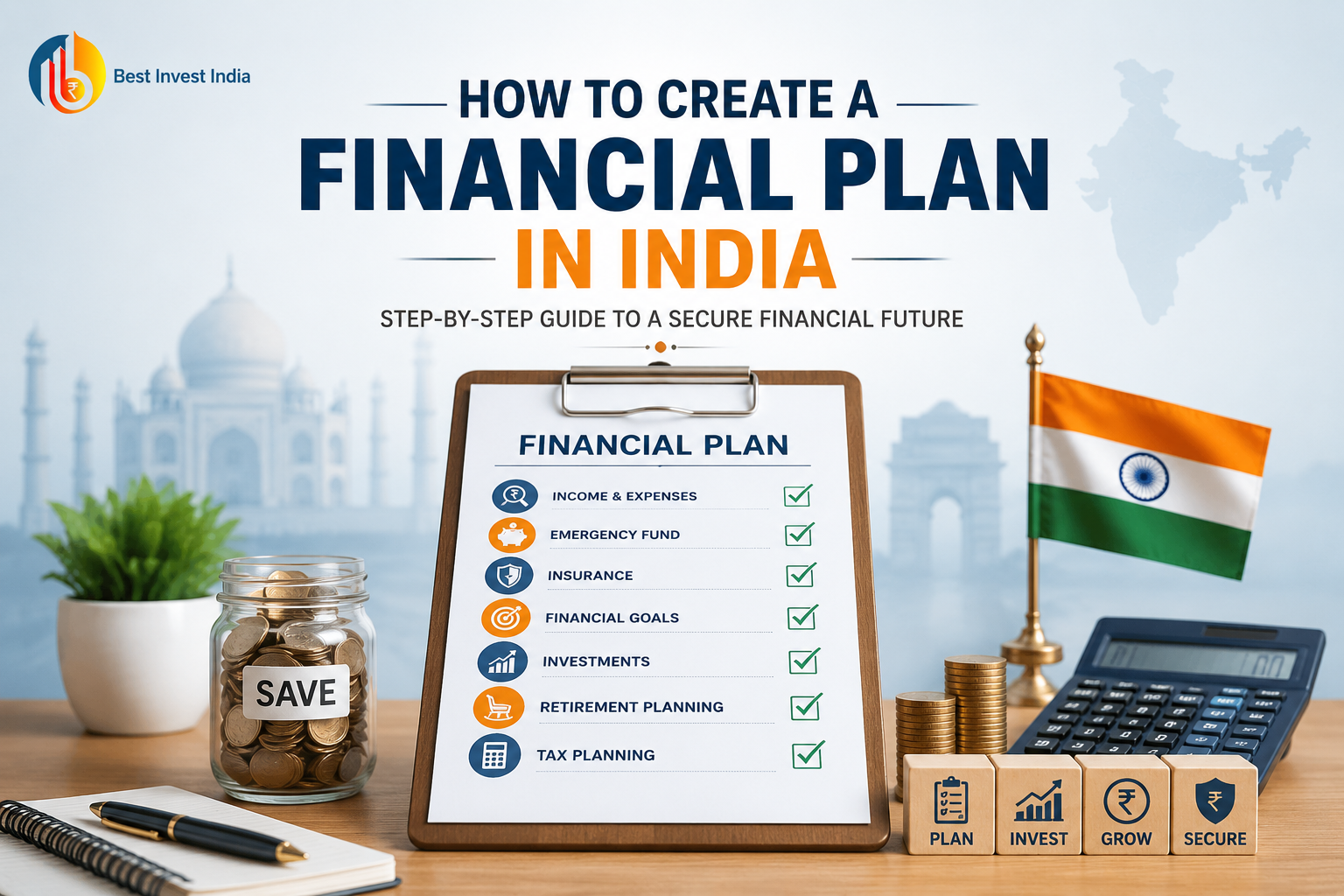
Complete Financial Planning Checklist India
1. Income & Budget Checklist
The first step in financial planning is understanding your cash flow. It is basically track of income and expenses.
Checklist:
- Track monthly income
- Monitor monthly expenses
- Create a monthly budget
- Avoid unnecessary spending
- Save before spending
A budget helps you understand where your money is going and allows you to increase savings systematically.
Salary Comes But No Savings? Here’s How to Save More Every Month
Simple Rule:
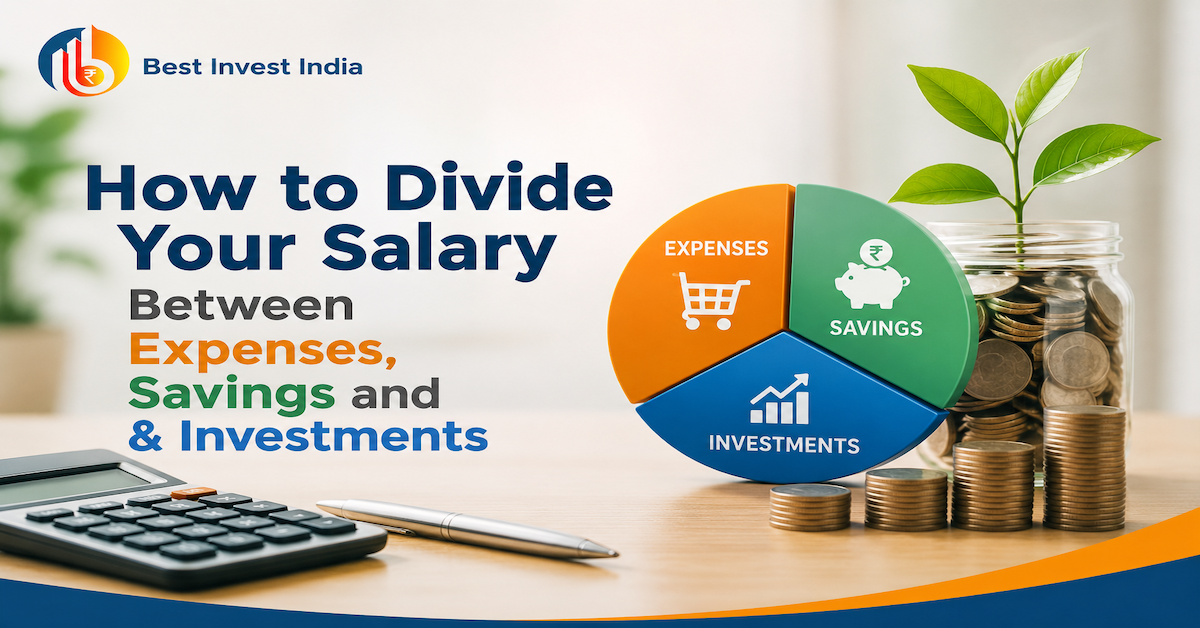
You may follow the 50-30-20 rule:
- 50% for needs
- 30% for wants
- 20% for savings and investments
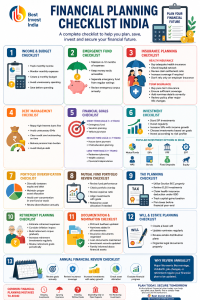
2. Emergency Fund Checklist
An emergency fund protects you during difficult situations like job loss, medical emergencies, or sudden expenses.
Checklist:
- Maintain 6–12 months of expenses
- Keep emergency money easily accessible
- Separate emergency fund from regular savings
- Review emergency corpus annually
Where to Keep Emergency Funds:
- Savings account
- Sweep FD
- Liquid mutual funds
An emergency fund prevents you from taking loans during crises.
Why Should you Have Separate Contingency/ Emergency Fund || Why is it necessary for healthy Life
Best emergency fund investment in India.
3. Insurance Planning Checklist
Insurance is one of the most important parts of financial planning.
Health Insurance Checklist
Checklist:
- Buy adequate health insurance
- Check hospital network
- Review claim settlement ratio
- Increase coverage if required
- Do not depend only on employer insurance
Medical inflation in India is rising rapidly, making health insurance essential.
How to decide health insurance cover amount?
Health Insurance-Which is better family floater or individual
Video Links: How to buy high health cover
How much health insurance needed
Should I buy Health insurance even if I am young.
Term Insurance Checklist
If your family depends on your income, term insurance is necessary.
Checklist:
- Buy pure term insurance
- Ensure sufficient coverage
- Add nominee details correctly
- Review policy after major life changes
Ideal Coverage:
Term insurance should generally be around 10–15 times your annual income but the right amount can be calculated after accessing all life goals.
Avoid mixing investment and insurance products unnecessarily.
4. Debt Management Checklist
Too much debt can damage your financial health.
Checklist:
- Repay high-interest loans first
- Avoid unnecessary EMIs
- Clear credit card outstanding on time
- Reduce personal loan burden
- Avoid lifestyle debt
Managing debt improves savings and investment potential.
Two ways to prepay your loan faster.
Top 5 ways to pay your home loan faster
Pay off your loan in half time, with a surplus
5. Financial Goals Checklist
Financial goals give direction to your investments.
Short-Term Goals
- Emergency fund
- Vacation planning
- Vehicle purchase
Medium-Term Goals
- House down payment
- Child education planning
Long-Term Goals
Goal-based investing helps you stay disciplined and focused.
Investment mistake 3 -short period investment for long term goals
6. Investment Checklist
Investing helps your money grow and beat inflation.
Checklist:
- Start SIP investments
- Invest regularly
- Increase SIPs with income growth
- Choose investments based on goals
- Invest according to risk profile
Popular Investment Options in India:
- Mutual funds
- SIPs
- PPF
- EPF
- NPS
- Bonds
- Fixed deposits
- Equity investments
Starting early can significantly improve long-term wealth creation due to compounding.
4 Reasons why should you invest today only.
7. Portfolio Diversification Checklist
Do not keep all your money in one investment category.
What is diversification and why it is important.
Checklist:
- Diversify between equity and debt
- Maintain proper asset allocation
- Avoid over-concentration in one fund or stock
- Review diversification annually
Diversification helps reduce overall investment risk.
8. Mutual Fund Portfolio Review Checklist
Many investors continue investing without reviewing their Mutual Fund portfolio.
Checklist:
- Review fund performance
- Check portfolio overlap
- Review expense ratio
- Align investments with goals
- Rebalance asset allocation if needed
Portfolio review should ideally happen once or twice every year.
Why Over-diversification In Mutual Funds Does Not Help
9. Tax Planning Checklist
Tax planning should not be done at the last moment.
Checklist:
- Utilize Section 80C properly
- Review ELSS investments
- Claim health insurance deduction under 80D
- Track capital gains taxation
- Plan taxes before financial year-end
Proper tax planning helps improve overall returns.
10. Retirement Planning Checklist
Retirement planning is often ignored, especially by younger individuals.
Retirement Planning in 30s, 40s & 50s India: A Complete Age-Wise Guide
Checklist:
- Estimate retirement expenses
- Consider inflation impact
- Build retirement corpus gradually
- Increase retirement investments regularly
- Review retirement goals periodically
The earlier you start retirement planning, the easier it becomes.
Retirement Planning in 30s, 40s & 50s India: A Complete Age-Wise Guide
Retirement Planning in India -Complete Guide
At what Age Should You Start Retirement Planning in India?
11. Documentation & Nomination Checklist
Proper documentation is extremely important for smooth financial management.
Checklist:
- PAN and Aadhaar updated
- Nominee added in all investments
- Insurance documents organized
- Loan documents maintained
- Investment records updated
- Family informed about financial assets
Good documentation reduces future complications for family members.
12. Will & Estate Planning Checklist
Estate planning is important for wealth transfer and family security.
Checklist:
- Create a basic will
- Update nominees regularly
- Review estate distribution plans
- Organize legal documents properly
Even a simple will can help avoid legal disputes later.
13. Annual Financial Review Checklist
Financial planning is not a one-time process.
Checklist:
- Review goals annually
- Review insurance coverage
- Increase investments with salary growth
- Check asset allocation
- Evaluate financial progress
Major life events like marriage, childbirth, job changes, or retirement require financial plan updates.
Common Financial Planning Mistakes to Avoid
1. Delaying Investments
The longer you wait, the harder wealth creation becomes.
2. Ignoring Insurance
Medical emergencies can destroy savings quickly.
3. Investing Without Goals
Random investments may not help achieve financial objectives.
4. Depending Only on Fixed Deposits
Inflation can reduce real returns over time.
5. Not Reviewing Investments
Financial plans should evolve with changing goals and market conditions.
11 Financial Mistakes Indians Make in Their 30s and 40s (And How to Avoid Them)
Final Thoughts
A proper financial planning checklist in India helps individuals and families build financial stability, manage risks, and achieve long-term goals. Financial planning is not only about investing money. It is about managing your entire financial life wisely.
Start with:
- Budgeting
- Emergency fund
- Insurance
- Goal-based investing
- Tax planning
- Retirement planning
- Regular portfolio review
Small financial decisions taken consistently over time can create significant long-term wealth.
For personalized financial planning, retirement planning, mutual fund portfolio review, and investment guidance, visit Best Invest India.